Dr. Sarah Mitchell, Au.D. — Monthly Hearing Health Bulletin
Board-Certified Audiologist | Mitchell Hearing Associates, Chicago, IL
A Note From Dr. Mitchell: Why I Changed the Advice I Give Every Patient
Dear Patients and Readers,
I want to begin this month's bulletin with a professional admission that doesn't come easily to me: I was giving my patients incomplete advice. For more than two decades, I counseled people with mild to moderate hearing loss that they had essentially two options — invest $3,000 to $6,000 in prescription hearing aids, or go without. I believed that was accurate. I was wrong.
In this issue, I want to share what changed my mind, what I've learned about over-the-counter hearing aids in the past 18 months, and specifically why I now recommend one product by name to virtually every patient who walks through my door who isn't ready for — or can't afford — prescription devices.
"For twenty-two years, I told patients: spend $4,000, or suffer. Neither option felt like medicine. It felt like a failure of our healthcare system."
— Dr. Sarah Mitchell, Au.D.The $3,000 Problem: A Clinical Perspective
Let me give you the data first, because that's how I think. According to the National Institute on Deafness, approximately 28.8 million U.S. adults could benefit from hearing aids. Of those, fewer than one in three who might benefit from wearing them has ever used them. When you ask why, the answer is almost always the same: cost.
The average price of a pair of prescription hearing aids in the United States is $4,700. With audiology fitting fees, follow-up appointments, and maintenance, the real first-year cost routinely exceeds $6,000. Medicare does not cover hearing aids. Most private insurance offers only token coverage, if any. For a retired patient on a fixed income — the demographic I serve most — that number is simply not accessible.
I knew all of this. What I didn't fully reckon with was what my recommendation to "go without" actually meant in clinical terms. Untreated mild-to-moderate hearing loss is not a benign inconvenience. It is associated with accelerated cognitive decline, social isolation, depression, and a documented increase in the risk of dementia — something I'll return to later in this bulletin. When I told patients "go without," I was, in effect, prescribing harm through inaction.
What Changed: The OTC Revolution and the Technology That Made It Real
In August 2022, the FDA finalized a rule allowing over-the-counter hearing aids for adults with mild to moderate hearing loss — no audiologist required. I watched this development with professional skepticism. My training conditioned me to distrust unregulated devices. Early OTC aids I reviewed were, frankly, little more than amplifiers: they made everything louder, indiscriminately, which can actually accelerate hearing damage if misused.
But then the technology caught up with the legislation. In the past two years, a wave of genuinely sophisticated OTC devices entered the market, and one company in particular earned my attention: Audien Hearing. Their Atom Pro 2 is what changed my clinical recommendations.
I want to be precise about what impressed me, because I don't give endorsements carelessly.
A Clinical Feature Breakdown: The Audien Atom Pro 2
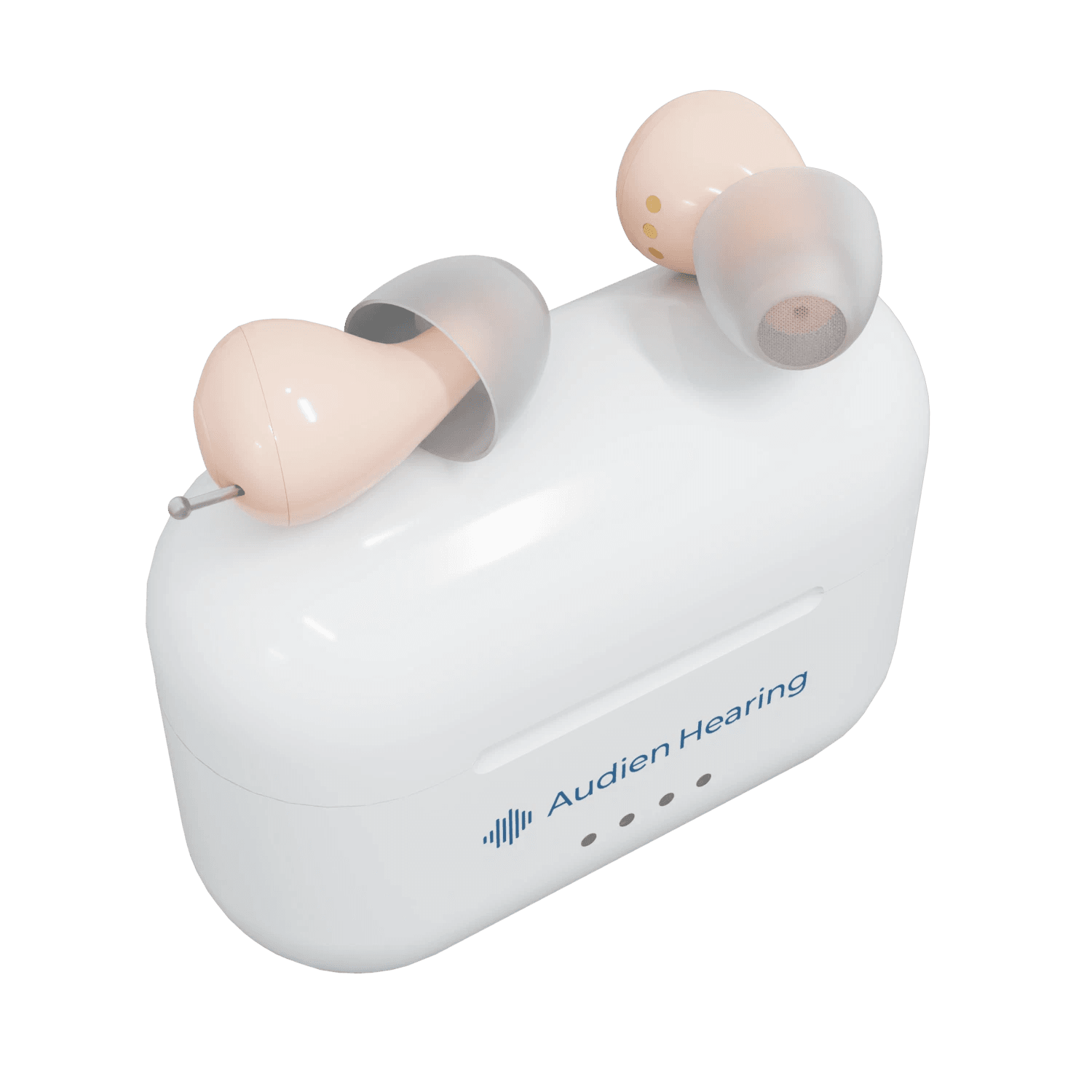
Signal Processing: The Atom Pro 2 uses Audien's proprietary A2™ chip, which provides digital signal processing across four distinct modes — conversation, restaurant, outdoor, and TV listening. This isn't simple amplification. The chip applies frequency-selective gain, meaning it amplifies the speech frequencies (roughly 500Hz–4kHz) where most of my patients have deficits, while attenuating background noise. The result is what audiologists call an improved signal-to-noise ratio — essentially, speech becomes clearer relative to noise, not just louder.
Physical Fit: The Atom Pro 2 uses a completely-in-canal (CIC) design — the smallest, least visible category of hearing aid. This matters clinically for two reasons. First, the placement deep in the canal leverages the ear's natural acoustic properties, improving sound localization and reducing wind noise. Second, and perhaps more importantly, patient compliance improves dramatically when the device is nearly invisible. Stigma is real. I have watched patients improve their hearing and their lives simply because they stopped being too embarrassed to wear their aids.
Noise Floor and Feedback Management: One of my primary concerns with cheaper OTC devices is acoustic feedback — that whistling sound that plagues poorly-fitted or poorly-engineered aids. The Atom Pro 2's feedback suppression has been, in my observation, genuinely effective. Patients report minimal feedback even in challenging acoustic environments.
UV Sanitization: The charging case includes UV-C cleaning technology that kills 99.9% of bacteria — the only OTC aid I am aware of with this feature. As an audiologist, I am well aware that ear canal devices can harbor bacteria and cause infections if not properly maintained. This is not a marketing gimmick; it is a meaningful hygiene feature.
No Hearing Test Required: The Atom Pro 2 is designed to be self-fitted. It is appropriate for adults with mild to moderate hearing loss — the majority of my patient population. The four adjustable modes allow for a degree of self-customization that, while not equivalent to professional audiological fitting, is clinically adequate for most patients in this hearing loss range.
What My Patients Are Reporting
Over the past fourteen months, I have recommended the Atom Pro 2 to patients who cannot afford or are not yet candidates for prescription devices. The outcomes, while anecdotal, have been striking enough that I feel compelled to share them here.
Patient Experiences

"I used to dread spending time with my grandchildren because I couldn't hear them properly. But now, thanks to Audien, I can hear their giggles and laughter as clear as a bell! It's like I've been given a whole new lease on life."

"Audien has had a considerable influence on my concentration. Its clear audio quality and noise cancellation technology helps me maintain focus no matter where I am, allowing me to remain engaged and productive all day."
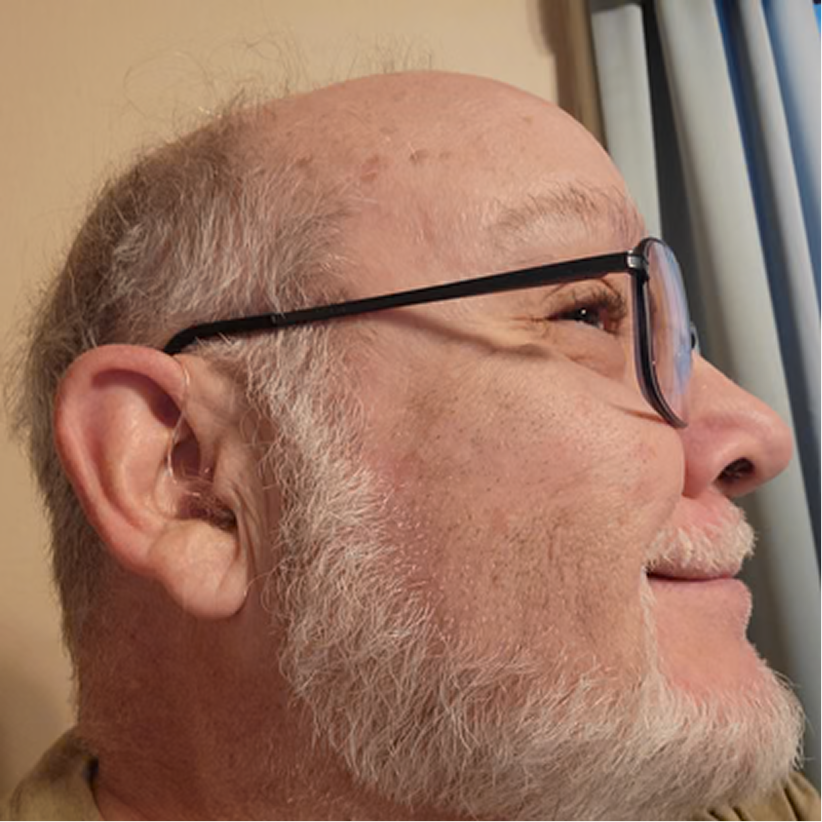
"I have used hearing aids for more than 10 years, always behind the ear kind. This is my first experience with in-the-ear kind. It took a few days to get used to them, but now I don't know I have them on — except for the great hearing. I love them."
If you have mild to moderate hearing loss and cost has been the barrier to addressing it, I now actively recommend you try the Audien Atom Pro 2 before concluding that you simply "can't afford" better hearing.
At $289 — with a 45-day trial period and free returns — the risk is genuinely low. In clinical terms, the risk-benefit ratio strongly favors trying it. The cost of untreated hearing loss — cognitively, socially, and emotionally — is far greater than $289.
I will continue to recommend full audiological evaluation and prescription aids for patients with moderate-to-severe loss, or those who need specialized fittings. But for the vast majority of patients who have been going without because of cost? This is no longer acceptable when an option like this exists.
— Dr. Sarah Mitchell, Au.D.
Price Comparison: OTC vs. Prescription
| Option | Price (Pair) | Trial Period | Requires Test? |
|---|---|---|---|
| Audien Atom Pro 2 | $289 | 45 days | No |
| Widex Moment Sheer | $3,000+ | 30–45 days | Yes |
| Phonak Audeo Lumity | $3,200+ | 30 days | Yes |
| ReSound OMNIA | $4,700+ | 30 days | Yes |
| Average Prescription Pair | $4,700 | 30 days | Yes |
Table reflects current market pricing. Prescription aid prices include professional fitting fees. Audien pricing as of March 2026.
→ See the Audien Atom Pro 2 — Trusted by 1.5 Million Customers