My Foreman Told Me to Retire. My Hearing Was So Bad I Missed Half of What He Said.
I'd been faking it on job sites for two years. My crew knew before I did.
It was a Tuesday morning on a commercial framing job in south Tulsa. Loud job, lots of equipment — the kind of site where you develop selective attention after thirty years because you can't actually hear everything and you learn to pick out what matters.
My foreman, Gary, pulled me aside near the lumber stack. He was talking. I caught fragments — "liability," "client," "concerned." I nodded the way I'd learned to nod when I needed time to piece together context. "Absolutely, Gary," I said. "I hear you."
I did not hear him. He was telling me to retire.
I found out later from one of the younger guys. Gary had been worried for months. Apparently I'd responded to instructions that weren't meant for me. Started tasks nobody had assigned. On one occasion, I'd confirmed something I literally couldn't have heard — and acted on it wrong. Safety concern. Gary liked me. He'd been trying to protect me.
I drove home that day and sat in my truck in the driveway for forty-five minutes.
The Beginning of the Slide
Occupational hearing loss is the most common work-related illness in the United States. Thirty-two years of power tools, nail guns, compressors, and concrete saws had taken their toll. I'd worn hearing protection. Not always. Not consistently. By the time I was 68, the damage was done.
I'd adapted. You always think you're adapting rather than declining. TV volume crept up. Phone conversations got harder. My wife Karen started repeating herself and stopped telling me she was repeating herself, which is a worse sign. My youngest grandkids — Ethan, 7, and Sophie, 4 — had voices I mostly couldn't follow.
Kids' voices are high-pitched. High frequencies go first with noise-induced hearing loss. I was losing my grandchildren's voices before they were old enough to remember having a conversation with me.
Five Things I Tried Before I Found Anything That Worked
- ✗VA referral (2022): VA hearing aid program had a 14-month waiting list. Not service-connected hearing loss means limited coverage. The paperwork alone took months.
- ✗Over-the-counter amplifier, $95: Bought it at a pharmacy. Amplified my tinnitus more than speech. Gave it to a neighbor after a week.
- ✗Big-box store hearing aid, $1,400: Better. The whistling and feedback in crowded environments was constant and embarrassing. Returned after 30 days.
- ✗Audiologist ($3,800/pair quote): Insurance didn't cover it. Karen offered to help pay. I refused. I've spent thirty-two years building things for other people's families. I wasn't about to let hearing loss drain our retirement.
- ✗Lip reading, louder environments: Started choosing restaurants by noise level. Stopped going to Ethan's baseball games because dugout conversations were impossible to follow. Started missing things on purpose to avoid the embarrassment of missing them accidentally.
How I Found It
Karen found it. She'd been researching for months without telling me — she knows me well enough to know I'd reject anything she directly suggested as charity. She left a browser tab open on the shared computer, "accidentally," and mentioned offhandedly that she'd seen a Forbes article about a hearing aid company that had won several awards.
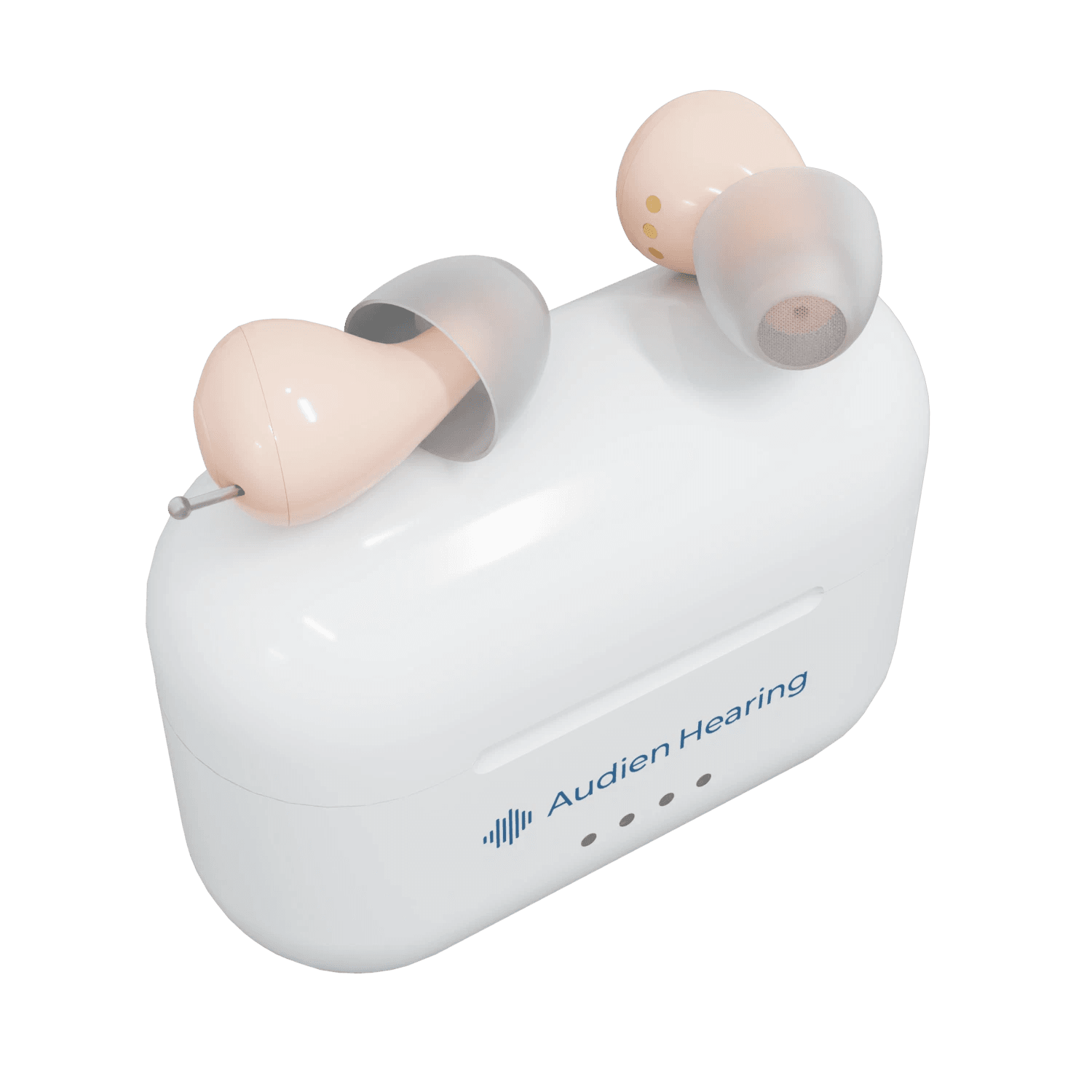
The company was Audien. The device was called the Atom Pro 2.
I read the Forbes ranking. Then NCOA. Then I spent an hour reading the reviews — real people with occupational and age-related hearing loss describing exactly what I'd been experiencing. The noise cancellation eliminating feedback. The four modes actually working in different environments. The UV cleaning case that kept the devices hygienic without manual maintenance.
$289 for a pair. Forty-five day risk-free trial. No prescription. Ships in two days.
I ordered that night while Karen was watching TV. I didn't tell her. I wanted to be sure it worked first.
Day One
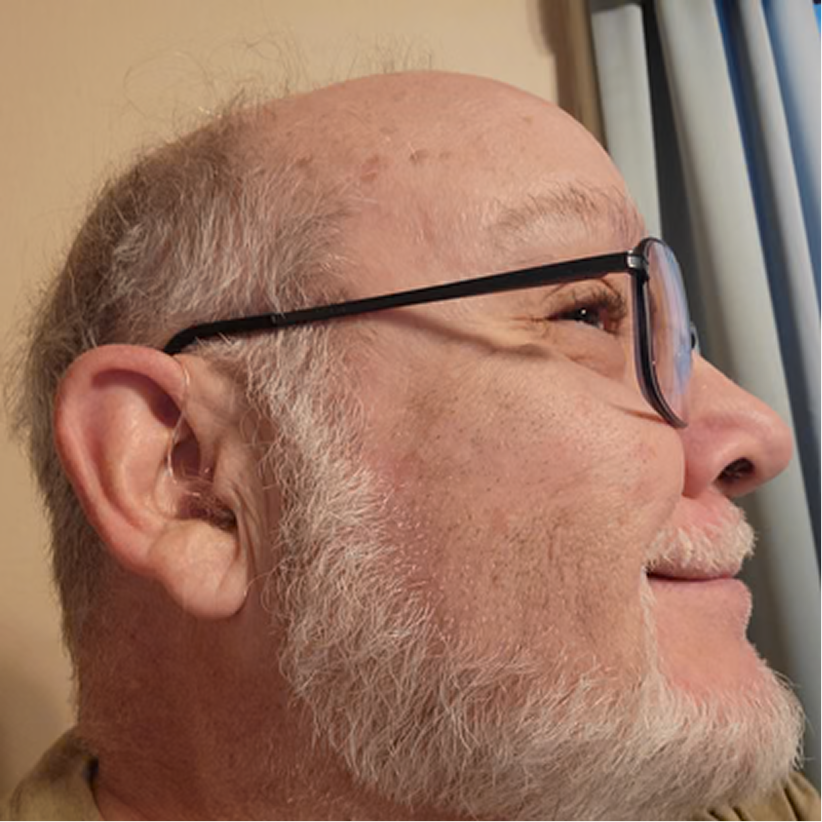
They arrived on a Thursday. Smallest hearing aids I'd ever seen. Completely-in-canal — almost invisible. I put them in following the simple instructions, selected "Conversation" mode, and walked into the kitchen where Karen was making coffee.
"Good morning," she said, her back to me, facing the counter.
I heard her. Not turned around, louder-than-usual Karen. Regular Karen. Morning Karen who talks to the coffee maker. I heard every word.
I sat at the kitchen table and I didn't say anything for a minute. Then I said, "Good morning," back, and she turned around and something in my voice made her look at me carefully. "What?" she said. "Nothing," I said. "Just a good morning."
That evening, Ethan and Sophie called on video. I switched to "Conversation" mode. Sophie said something about her drawing and I caught every word — the colors she'd used, the story behind it, why the horse had three legs. I haven't heard Sophie explain a drawing in over a year. I listened to the whole thing. She was very pleased.
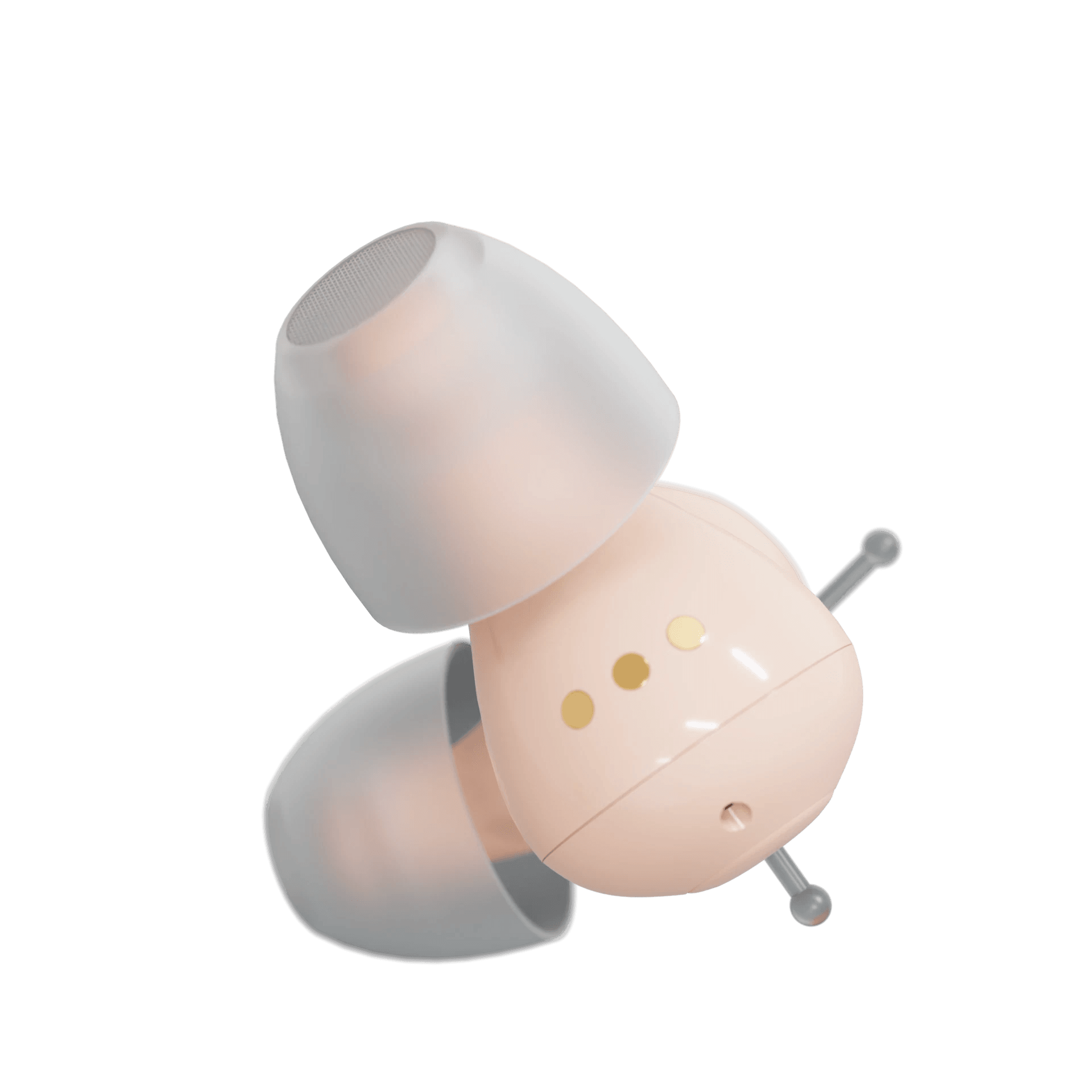
Smallest CIC design available — near-invisible, worn completely inside the ear canal.
The Audien Atom Pro 2 — What I Was Actually Using
- ✦ A2™ chip — audiologist-developed sound processing with adaptive noise cancellation
- ✦ 4 hearing modes — Comfort, Conversation, Crowd, TV (each actually works differently)
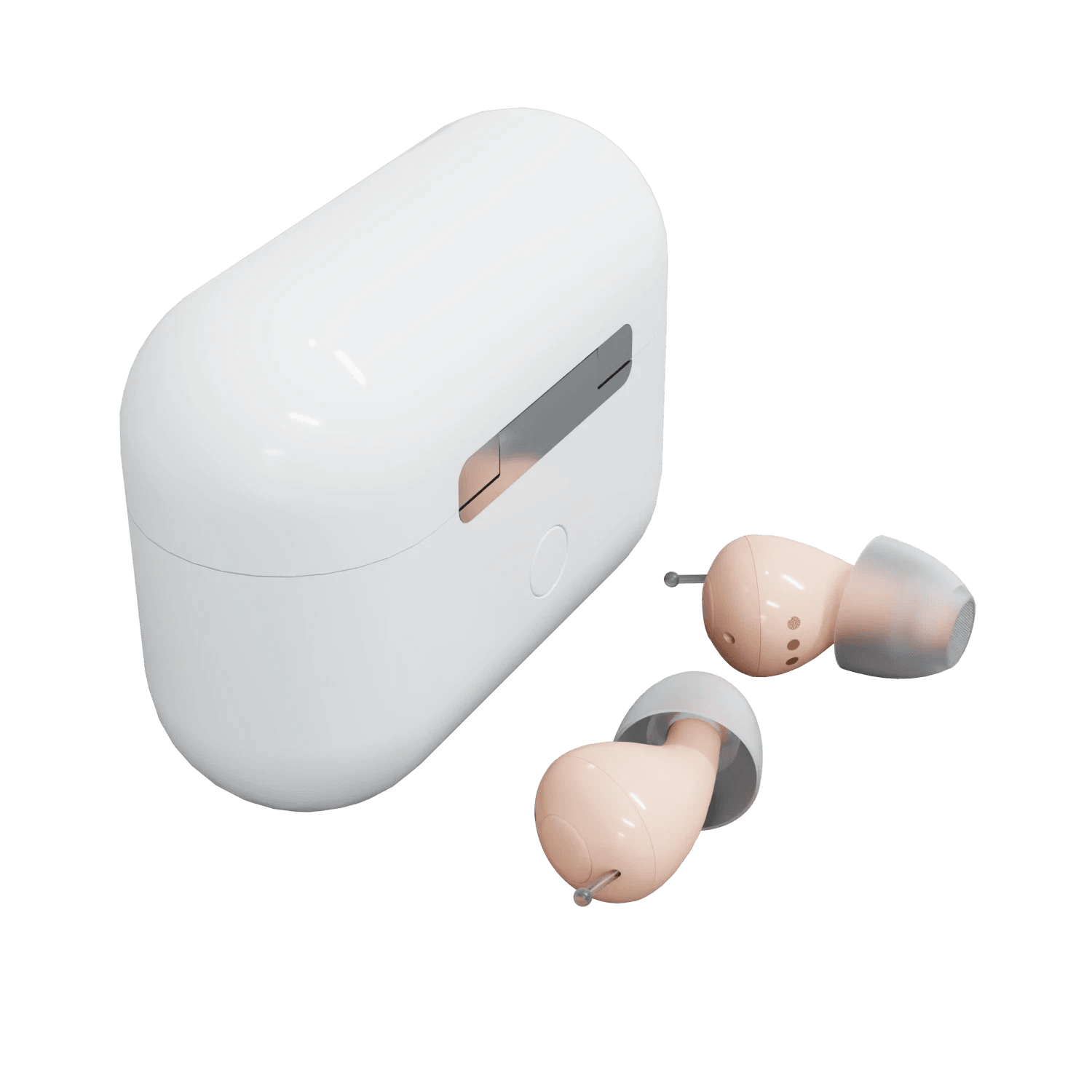
- ✦ UV self-cleaning case — kills 99.9% of bacteria every charge — world's only hearing aid with this
- ✦ 48-hour battery with case — no daily charging anxiety
- ✦ Smallest CIC design on the market — most people can't see them at all
- ✦ No feedback, no whistling — the noise cancellation is exceptional
- ✦ $289/pair — Forbes Best of 2025, NCOA Top Pick, 5,000+ five-star reviews
- ✦ No prescription, no hearing test required
What Changed
Within 3 days: Switched to Crowd mode at Ethan's baseball game for the first time. Heard the other parents, the umpire calls, the kids talking in the dugout. Sat with the parents' group for the whole game. Karen kept looking at me sideways.
By week 2: Told Karen about the Atom Pro 2. She already knew — she'd seen them in the charging case on the nightstand. She said: "I was waiting for you to tell me." She was not even slightly surprised. She was very pleased.
At month 2: Got a call from Gary. Just checking in. We talked for twenty minutes — real conversation, not fragments. He said I sounded good. I said I was good. Told him about the hearing aids. He said he was glad. That meant a lot.
I still keep the UV cleaning case on the nightstand. Every morning, clean and charged. I wear them all day. Crowd mode for loud environments, Conversation for everything else. TV mode in the evenings when Karen and I watch something together. First time in two years we've watched TV at a volume that's comfortable for both of us at the same time.
→ Here's where I found the Atom Pro 2, if you want to take a look
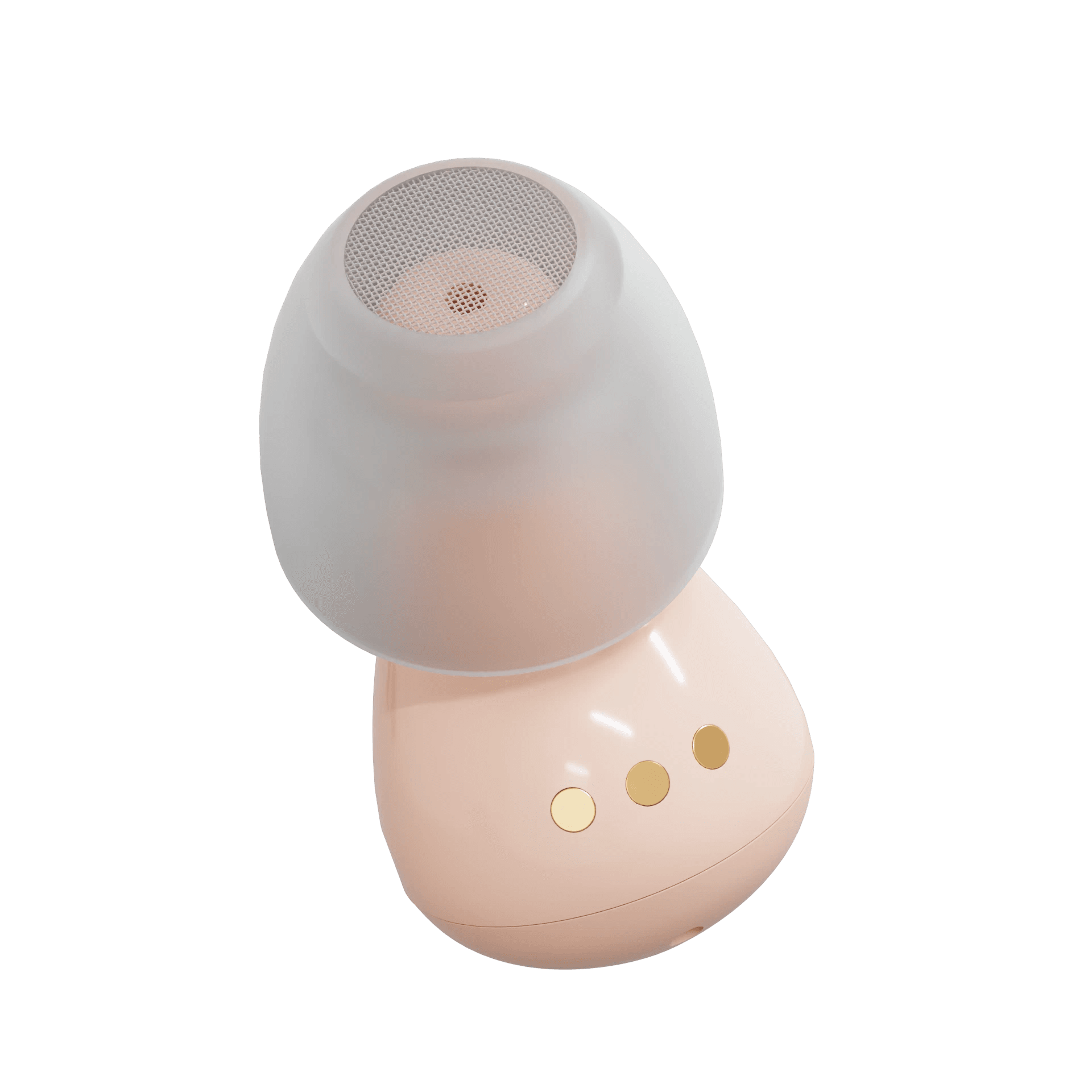
The UV self-cleaning case — charges your aids AND eliminates 99.9% of bacteria. Overnight, automatically.
What Others in the Same Boat Are Saying

Free shipping • No prescription • 45-day return policy • Forbes Best of 2025
🏆 Forbes Best of 2025 — Current Offer
 → Get the Atom Pro 2 — Hear Everything You've Been Missing
Ships within 24 hours • 45 days to decide • Trusted by 1 million customers