I Missed My Daughter's Wedding Vows. Here's What I Did About It.
I smiled and cried at all the right moments. Nobody knew I couldn't hear a single word.
The church was full. White flowers everywhere. My daughter Emily was the most beautiful I'd ever seen her, walking toward the man she'd chosen to spend her life with. The string quartet played. The pastor spoke. Daniel said his vows.
I watched my daughter's face change as she heard them. She pressed her lips together. Her eyes filled. She laughed a little through her tears the way she's done since she was six years old.
I heard none of it. Not a word.
I sat in the front pew — front pew, the mother of the bride — and I heard murmuring and reverb and the sound of my own heartbeat. I watched the most important moment of my daughter's life through a glass partition of silence and nodded and cried because that's what you do when you're a mother who is ashamed to tell anyone, even the people who love her most, that she hasn't been able to follow a conversation for three years.
How It Started — And How I Hid It
I was 63 when I noticed. A student asked me a question from the back of the classroom and I answered something that had nothing to do with what she'd said. Twenty-eight years of teaching and I'd always been able to hear a whisper from across the room. Not anymore.
I retired the following year. I told myself it was time. I didn't tell anyone it was because I couldn't follow classroom conversations anymore.
The strategies I developed would fill a book. Sitting close to whoever was speaking. Positioning myself to read lips in restaurants. Choosing corner seats with walls behind me so I only had to process sound from one direction. Laughing when others laughed. Nodding. Saying "absolutely" or "I know, right?" when I'd lost the thread entirely.
It's exhausting to fake being present. I did it for years.
Everything I Tried (And Why None of It Worked)
- ✗Audiologist appointment #1 (2022): Confirmed mild-to-moderate hearing loss. Recommended aids at $4,200/pair. Insurance covered $500. I left without buying anything and felt more hopeless than before I'd gone.
- ✗$79 amplifier from Amazon: Amplified everything equally. Background noise became a wall of sound. Couldn't distinguish voices. Returned in 5 days.
- ✗Second audiologist (2023): Suggested a "more affordable" option at $1,800/ear. Still $3,600 for the pair. I asked if they had payment plans. The look on the receptionist's face made me want to disappear.
- ✗Another OTC brand, $650: Better than the amplifier. Not good enough. Constant whistling. The app was confusing. Gave up after two weeks.
- ✗Lip reading course online: I'm not embarrassed to say I took one. It helped in one-on-one conversations. It was completely useless at Emily's rehearsal dinner when eight people were talking simultaneously.
- ✗TV captioning, phone subtitles: Made some things easier. Made the hearing loss more real and more depressing every time I used them.
The Turning Point
It was my friend Patricia who sent me the link. We'd been friends for forty years and I hadn't told her about my hearing. She'd sent it with a note: "Saw this and thought of you — I'm not sure why, but something told me you might want to look." Patricia always knows things before she should.
The company was called Audien. The device was something I'd never heard of: a completely-in-canal hearing aid with a touchscreen charging case. No app required. No audiologist visit. No prescription. $389 for a pair.
I almost closed the tab. I'd been burned by cheap hearing products. I'd built up a wall of skepticism thick as a cathedral door.
Then I read about the 45-day risk-free trial. Full refund. No questions. I thought: what do I actually have to lose?
The Morning They Arrived
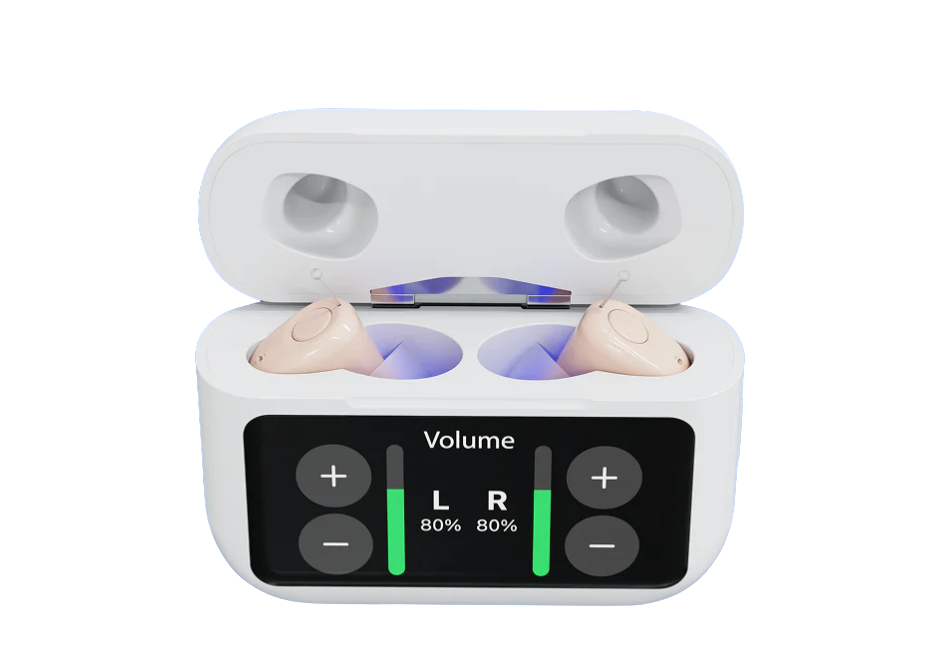
They came in three days. I opened the box on my kitchen table on a Tuesday morning in November. The case was remarkable — solid, well-made, with a small touchscreen on the front. The hearing aids themselves were tiny. Smaller than anything I'd imagined. Nearly invisible.
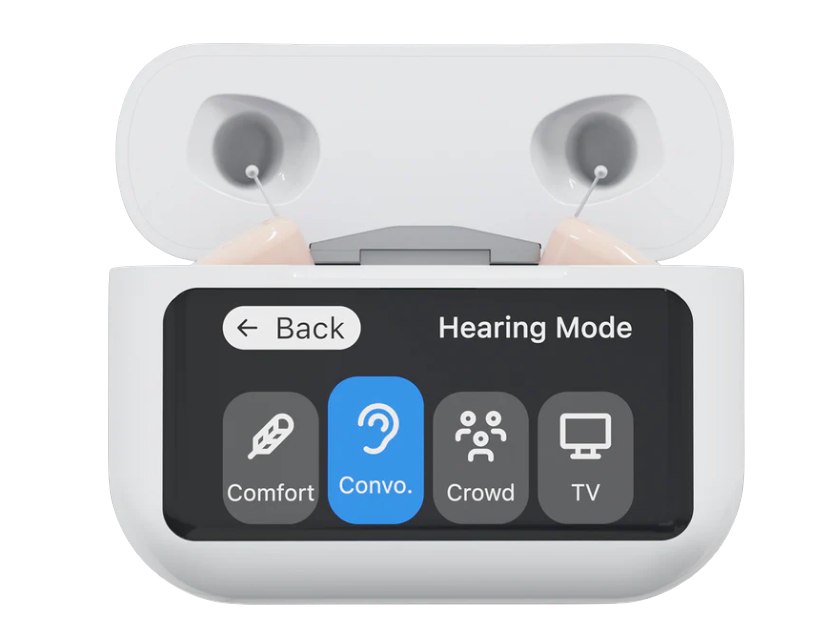
I placed them in my ears following the simple instructions. Selected "Conversation" mode on the case touchscreen. Walked into the living room where the television was on — I'd left it running as background noise the way you do when you live alone.
I could hear the television. Not louder. Clearer. Words that had been swimming in soup for three years sharpened into sentences. I stood very still, afraid to move in case it stopped.
Then my phone rang. My son Michael calling from Denver. I answered it the way I always do now — pressing the button on the case that routes the call directly to the Atom X through Bluetooth. No earpiece. No speakerphone. Just his voice, in my ears, clear as if he were standing in the same room.
I cried. I'm crying again now remembering it.
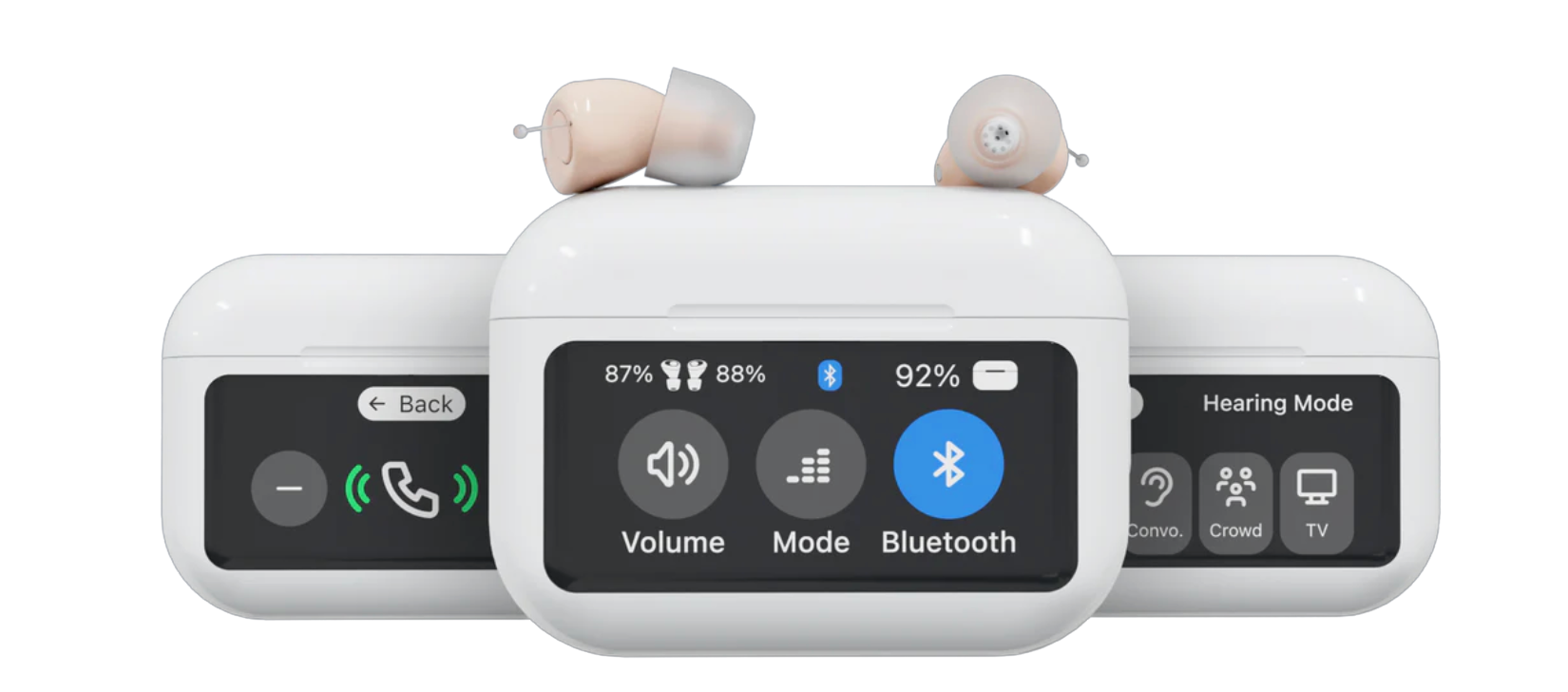
The CaseControl™ touchscreen case — no app needed. Switch modes, take calls, control everything from the case.
What I Was Actually Using: The Audien Atom X
- ✦ CaseControl™ touchscreen — switch modes without an app, with reading glasses on, with arthritic fingers
- ✦ A2™ MAX sound chip — the most powerful processing Audien has built
- ✦ 4 modes: Comfort, Conversation, Crowd, TV — each tuned for its environment
- ✦ Bluetooth streaming — music and calls direct to your ears
- ✦ UV self-cleaning case — eliminates 99.9% of bacteria overnight
- ✦ 48-hour battery with case — never scramble for replacements
- ✦ Near-invisible CIC design — nobody knows you're wearing them
- ✦ $389/pair — 90% less than prescription alternatives
Three Days In. Six Weeks In. Now.
Within 3 days: I called my sister in Phoenix — the first phone call in two years I didn't have to ask her to repeat herself constantly. We talked for an hour. She cried. I didn't tell her why, at first.
By week 2: I went to my book club for the first time in months. I'd been avoiding it because following group conversation had become impossible. I sat in the circle of women I've known for fifteen years and I followed every word. Every joke. Every argument about character motivation. I went home and sat on the porch for an hour thinking about how much I'd missed.
At week 6: Emily called. She said she'd noticed something different when we'd had lunch together the week before. "Mom," she said, "you seem like yourself again." I told her about the Atom X. She cried. We cried together. She said: "Why didn't you tell me?" I said: "I don't know. I think I was ashamed." She said: "Never be ashamed with me."
I've been wearing them every day for four months now. I charge them overnight in the UV case and they're clean and ready every morning. I use the touchscreen to switch between modes — Crowd when I'm at a restaurant, TV in the evenings, Conversation when I'm with people I love.
Last month, Emily came to visit with her husband. We sat on the back porch, the three of us, and I heard every word of every conversation. Everything she's married into. His stories, his humor, the way he talks to her when he thinks no one is paying attention. Everything I'd been missing.
→ Here's where I got them, if you want to try them yourself
Others Who've Made the Same Journey



Free shipping • No prescription • Full refund if not satisfied
Current Special Offer
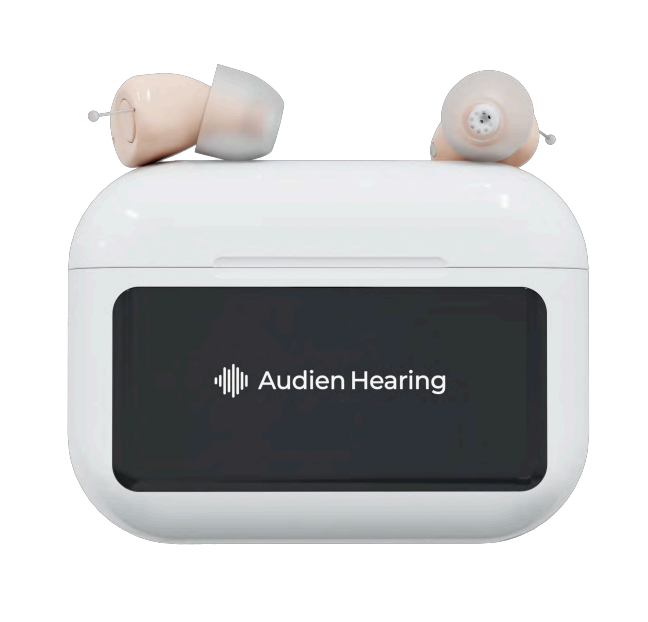 → Get the Atom X — Start Hearing What You've Been Missing
Ships in 24-48 hours • 45 days to decide • Trusted by 1.5 million